
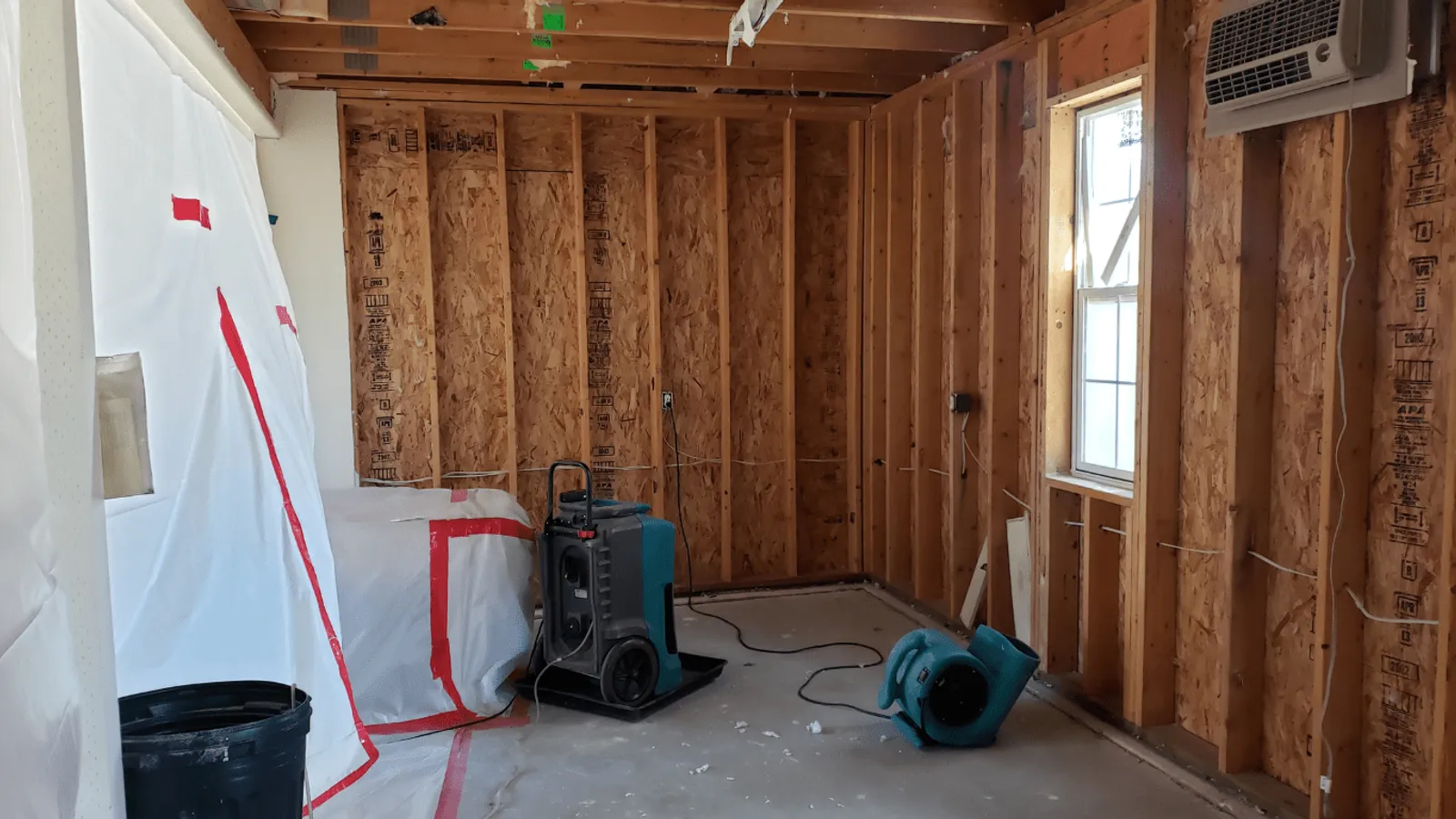
Structural drying after water damage
Removing standing water is only the first step. Structural drying removes the moisture that has soaked into walls, floors, timber framing and concrete, using measured, controlled methods, so materials don't stay damp and grow mould.
Get a quote
We'll call you back to talk it through.
Thanks. We've got it.
We'll call you back shortly. If water is still spreading, call 1300 677 823 now and we'll dispatch a team immediately.









What structural drying involves.
Structural drying is a specialised part of water damage restoration that focuses on drying the building itself, not just the visible water. Using extraction, air movement and dehumidification, we remove liquid water and the moisture bound inside carpet, underlay, concrete slabs and timber framing.
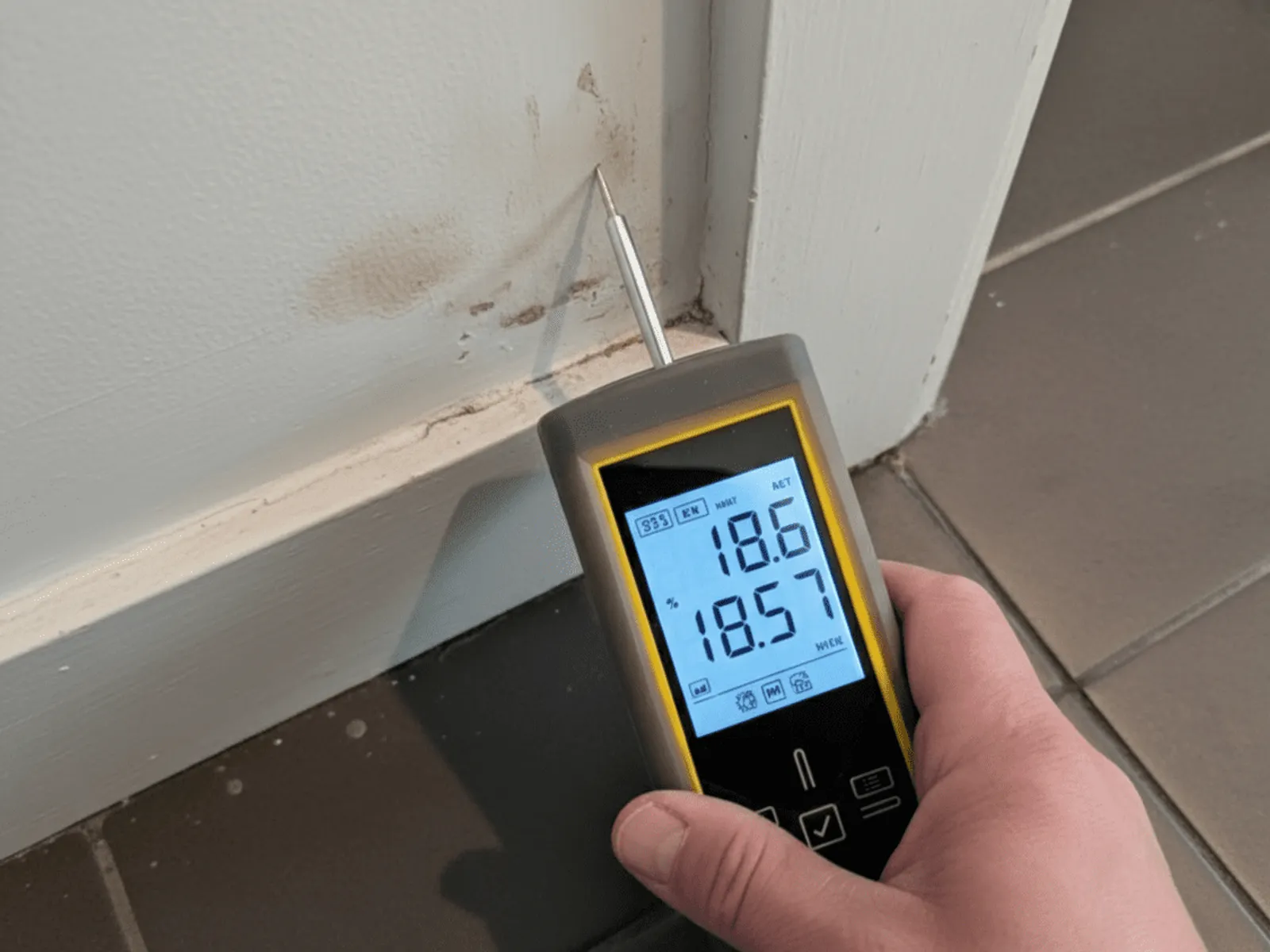
We map how far water has travelled using moisture meters and thermal imaging, then design a drying plan for the building and the materials involved. It's measured, not guesswork.
Proper drying reduces the risk of mould, prevents warping, swelling and decay, keeps demolition to a minimum, and shortens the overall restoration timeline.
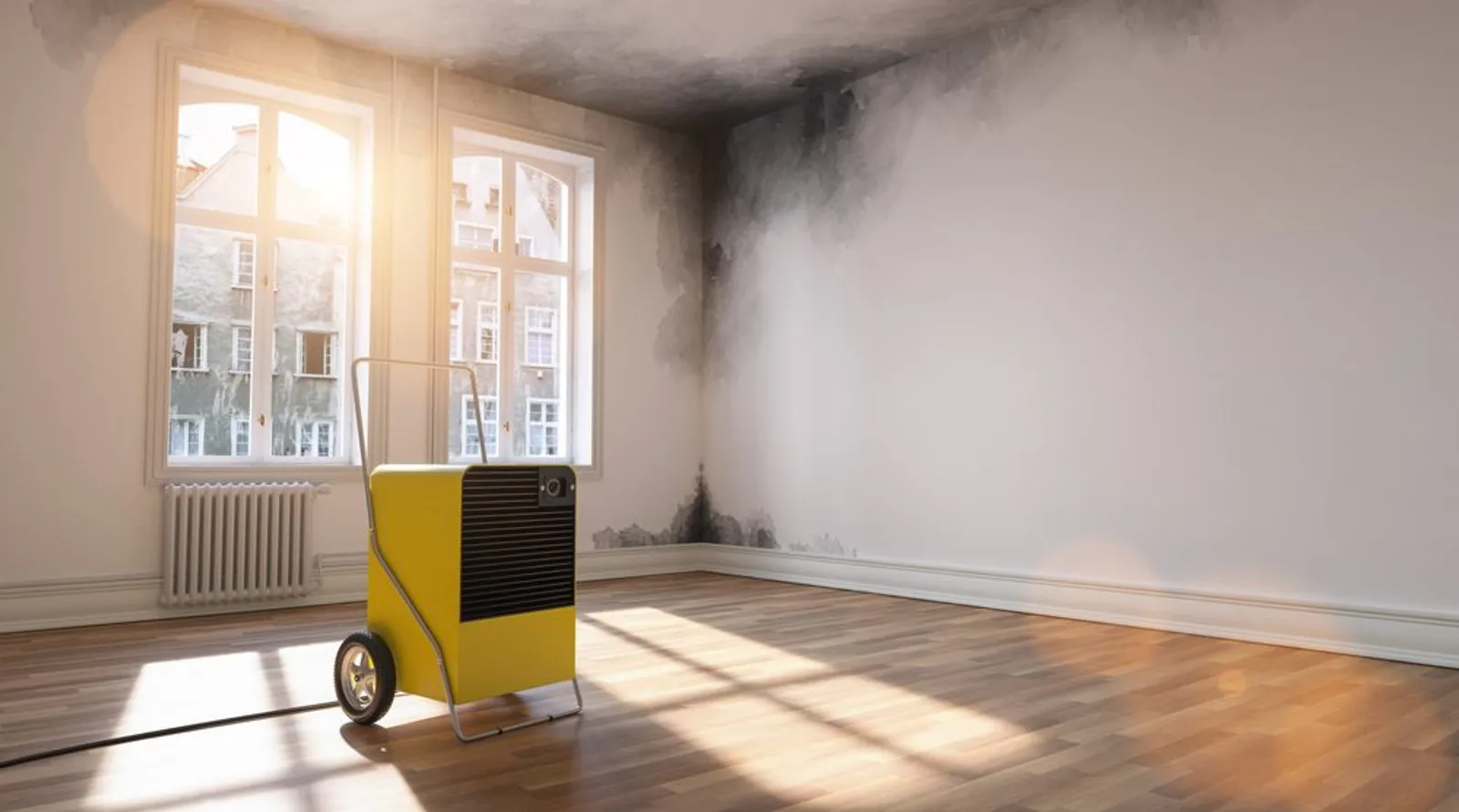
Signs you need structural drying.
- After any leak, burst pipe or flood
- Carpets and underlay that were soaked
- Wet plasterboard or swelling skirting boards
- Water in a concrete slab or under floor coverings
- A commercial site that needs to reopen quickly
- A builder needing materials dry before repairs
Recognise any of these?Get it checked before it spreads. We'll find the cause.
Water damage becomes mould damage in 24 to 48 hours.
Every hour water sits, it spreads further into walls, floors and ceilings. Once mould grows, it affects the air everyone breathes, especially people with asthma or allergies.
- Hour 1Water spreadsInto walls, under floors, through ceilings.
- 24–48 hrsMould can startWet materials need drying within this window.
- DaysDamage buildsMusty smells, staining, swelling timber.
- WeeksBigger repairsMore removal, longer disruption, poorer air.
Sources: US EPA guidance; Better Health Channel.
How structural drying works.
Select a step to see what happens.
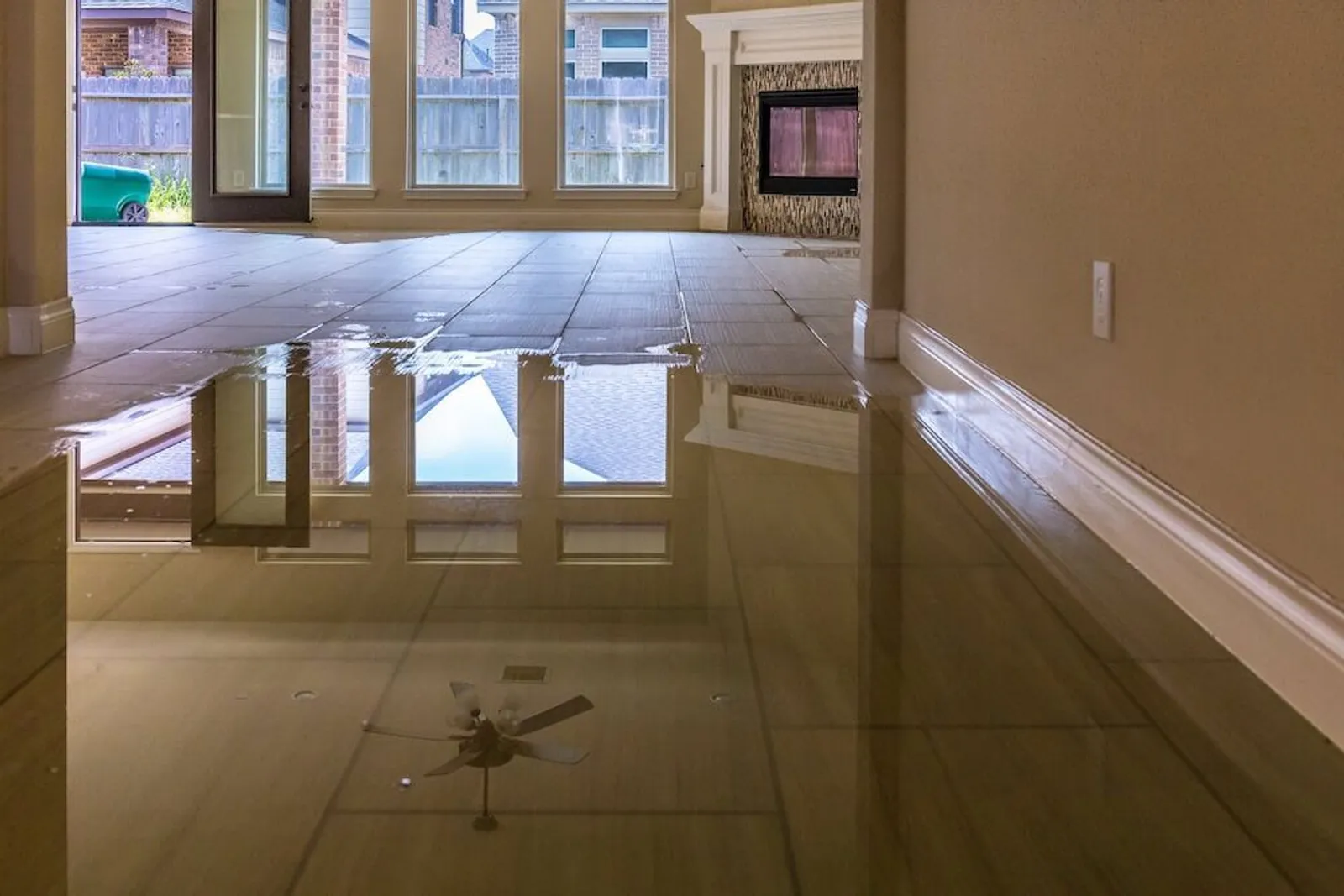
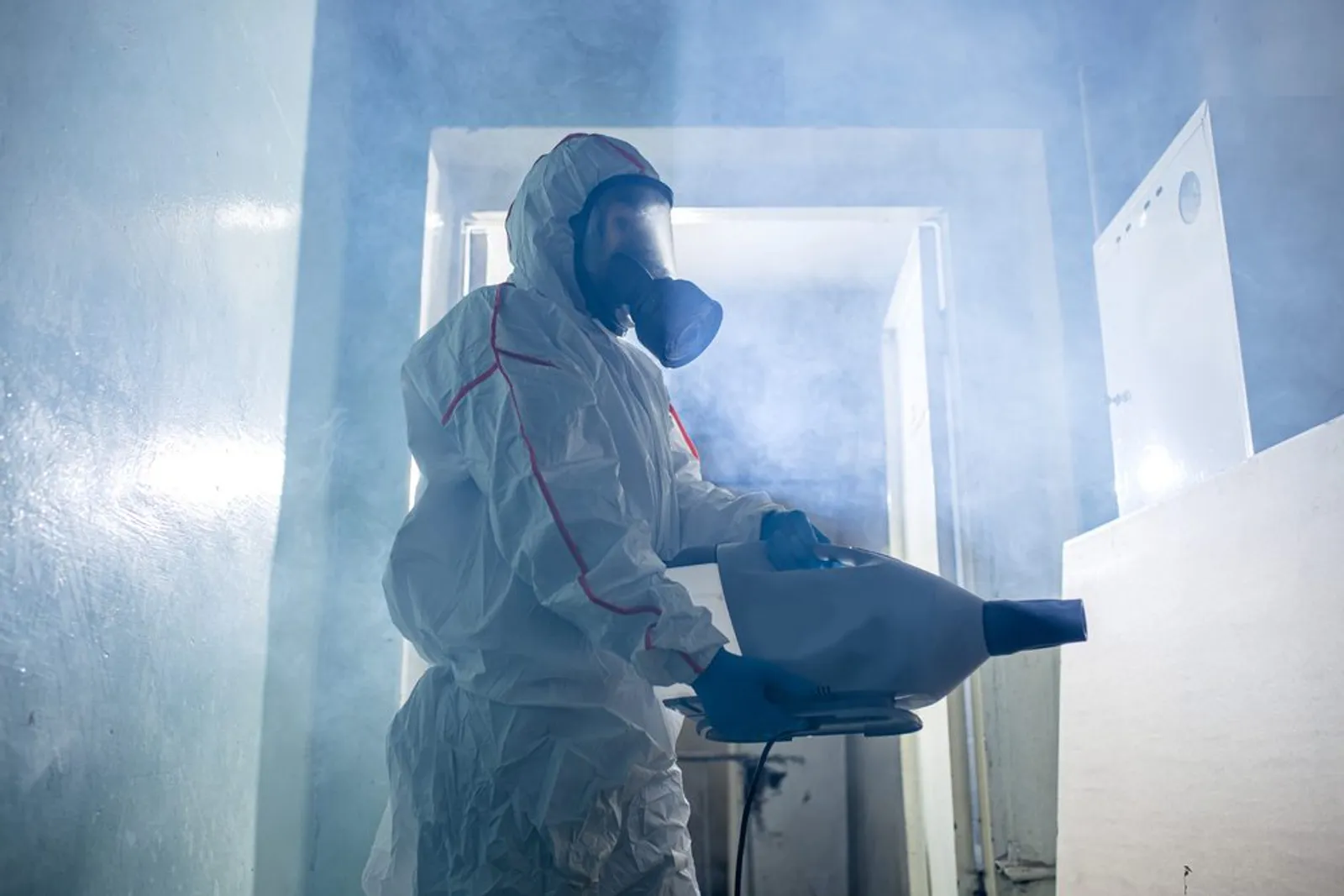
Ready when you are.Active leaks, flooding and fire damage get a team immediately. For everything else, we book the earliest time.
What you receive after structural drying.
- Drying planBased on the materials and how far water travelled.
- Regular updatesMoisture readings at each visit.
- Drying completion reportUsed by insurers and builders to plan the next stage of works.
- Mould checkAny mould found is treated before handover.
Who it's for.
Homeowners, and the professionals who manage buildings and claims. We tailor the reporting to whoever needs it.
- Insurers & loss adjusters
- Builders
- Facility managers
- Strata
- Homeowners
Trusted in Melbourne homes and buildings since 2012.
Certified technicians, honest advice and results you can see in the readings.
“We'd been battling mould in our son's bedroom for years. After Mould Squad found the leak in the wall and treated the room properly, his asthma has noticeably improved. I wish we had called them sooner.”
“Nil is a genuine guy and provides an amazing service when it comes to water damage restoration. Our house was damaged recently due to heavy rains and Nil and his team have done some amazing work restoring our roof that had been damaged by rain.”
“Really impressed with the clear communication. No scare tactics, just honest advice, photos and a practical plan. The team turned up on time, kept everything tidy and followed up with air quality results so we knew it had actually been fixed.”
“Would definitely recommend mould remediation services from Mould Squad. They are the best in the industry and have done an amazing job at our home, making it mould free.”
Structural drying questions, answered.
Still unsure? Talk to a technician. Ask us anything.
What is structural drying?
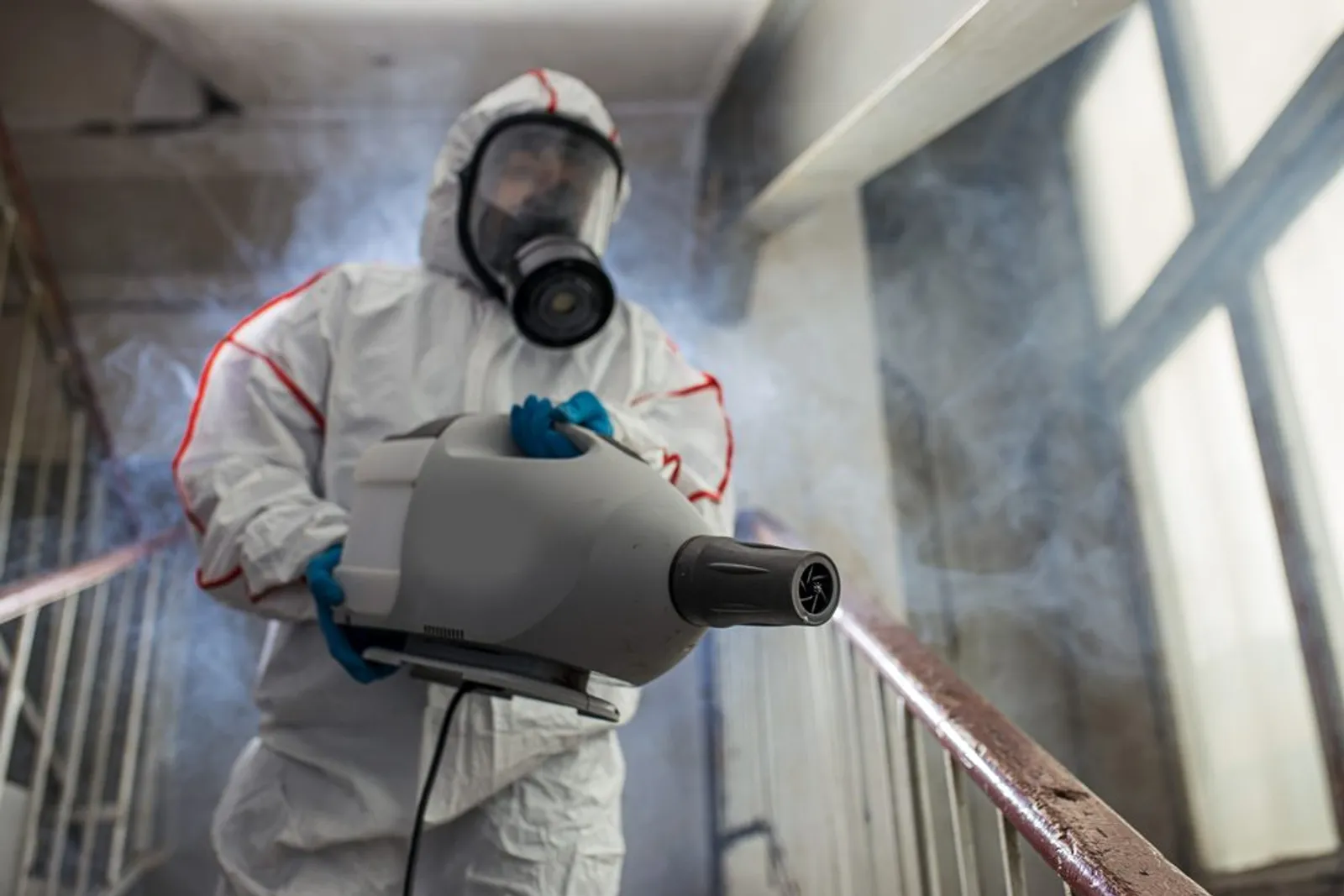
It's the process of drying a building's materials, such as walls, floors, framing and slabs, after water damage, using extraction, air movers and dehumidifiers, and monitoring with moisture readings until materials return to normal levels.
Why can't I just use fans?
Fans move surface air but don't remove moisture from the room, and they can't dry water bound inside timber or concrete. Without dehumidification and monitoring, materials can feel dry on the surface but stay damp inside, which leads to mould.
Do you dry commercial buildings?
Yes. We dry offices, retail, industrial and multi-residential buildings, plan equipment around operating hours where possible, and provide the reports facility managers and insurers need.
How do you know when it's dry?
We take moisture readings of affected materials and compare them with unaffected areas of the same building. Equipment comes out when the readings confirm the materials are dry.
Is structural drying covered by insurance?
If your policy covers the water damage, drying the building is usually part of the claim because it limits further damage. Check with your insurer. We provide the drying records and completion report insurers and loss adjusters ask for.
Structural drying across Melbourne and Victoria.
We're based in Dandenong South and work across all of Melbourne and regional Victoria, for homes, rentals, strata buildings and commercial sites.
- South-eastDandenong, Berwick, Cranbourne, Pakenham, Frankston and the Mornington Peninsula
- EastBox Hill, Glen Waverley, Ringwood and the Yarra Ranges
- NorthPreston, Coburg, Epping and Craigieburn
- WestFootscray, Sunshine, Point Cook and Werribee
- CBD and inner suburbsMelbourne CBD, Southbank, Richmond, St Kilda and surrounds
- Regional VictoriaGeelong, Ballarat, Bendigo, Gippsland and beyond
Not sure if we cover your area? Call 1300 677 823.
Found mould or water damage? Let's fix it properly.
No-obligation quote. For leaks and flooding, we dispatch a team immediately.